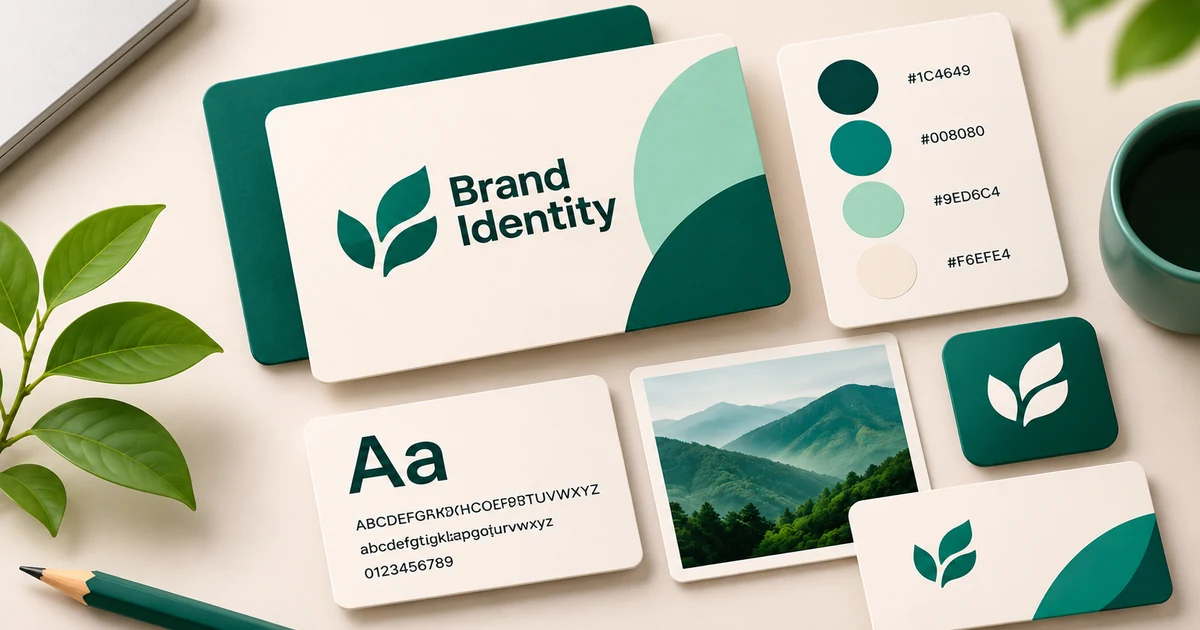
Brand identity is often associated with a company’s logo, but it includes much more than a visual symbol. It represents the collection of elements a business uses to communicate its characteristics, values, and purpose.
These elements include the brand name, logo, colours, typography, imagery, and communication style. Together, they help establish how a business presents itself and how it wants to be recognised by its audience.
This guide explores the meaning of brand identity, its main elements, its relationship with brand image, and how businesses can develop a consistent identity.
Why Is Brand Identity Important?
A clear brand identity helps businesses communicate what they represent and establish a recognisable presence. Additionally, it provides a consistent direction for visual and verbal communication.
Brand Recognition
Consistent use of logos, colours, and typography makes it easier for people to recognise a business across different platforms. Repeated visual elements can become associated with a particular brand over time.
Differentiation
Businesses often compete with others offering similar products or services. A distinct identity helps communicate what makes a business different and gives audiences a reason to remember it.
Brand Personality
Visual and verbal elements communicate characteristics such as professionalism, creativity, simplicity, or friendliness. These characteristics influence how people understand a brand.
Consistency
Customers encounter businesses through websites, social media, packaging, advertisements, and other channels. A consistent identity helps connect these interactions and create a recognisable brand experience.
Research has also examined the relationship between consistent brand presentation and business performance. A study by Demand Metric and Lucidpress reported an association between consistent brand presentation and stronger brand visibility. However, these findings describe the organisations surveyed and should not be interpreted as a guarantee of improved business results.
What Are the Main Elements of Brand Identity?
Brand identity consists of several elements that work together. Each component has a different role in representing the business and communicating its characteristics. Together, these elements create a recognisable identity.
Brand Name and Logo
The brand name and logo are among the most recognisable elements of a business. They provide an identity that helps distinguish it from other organisations.
Logos can take different forms, including wordmarks, symbols, monograms, and combinations of text and graphics. Their design should reflect the brand’s direction while remaining recognisable across different sizes and applications.
Brand Colours
Colours contribute to the visual character of a brand. A defined colour palette also helps maintain a consistent appearance across websites, packaging, advertisements, and other materials.
When selecting brand colours, businesses should consider their visual direction, intended audience, industry, and practical design requirements. A typical palette includes primary colours, supporting colours, and accents.
Typography
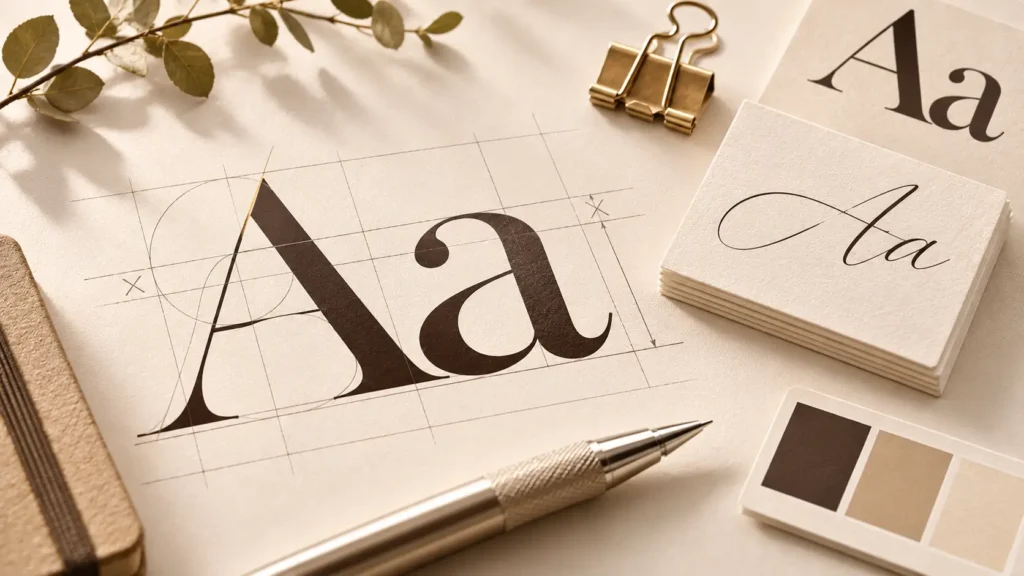
Typography refers to the selection and use of typefaces in brand communication. It influences the appearance of written information and contributes to the overall character of a visual identity.
Different typeface styles can create different visual impressions. Serif typefaces, for example, are often used in editorial and traditional design, while sans serif typefaces are common in contemporary and minimal layouts. These associations are not fixed rules, so typeface selection should consider the brand’s context and audience.
A consistent typographic system defines font families, weights, sizes, and hierarchy for headings, body text, and other applications.
Photography and Imagery
Photography and imagery help establish the visual direction of a brand. The choice of subjects, lighting, composition, and editing style contributes to how the brand is presented.
A business may use bright product photography, natural lifestyle images, illustrations, or editorial-style visuals depending on its identity.
Graphic Elements and Patterns
Graphic elements include icons, shapes, illustrations, lines, textures, and recurring patterns. They support the logo and other visual components by creating a broader visual language.
When used consistently, these elements can make brand materials more recognisable without relying on the logo in every application.
Brand Voice and Messaging
Beyond visual elements, brand identity also covers how a business communicates through language. This communication style is known as brand voice, which includes tone, vocabulary, and messaging.
For example, a business may use a formal and informative tone, while another may prefer a more conversational approach. The chosen voice should reflect the brand’s character and remain consistent across communication channels.
Brand Identity vs. Brand Image
Beyond visual elements, brand identity also covers how a business communicates through language. This communication style is known as brand voice, which includes tone, vocabulary, and messaging.
This distinction is also reflected in David Aaker’s brand identity planning model, which considers identity as the associations a business aims to create and maintain. You can explore Aaker’s brand identity planning model for further background.
For example, a company may present itself as approachable and environmentally responsible through its messaging, colours, and visual design. However, its actual brand image depends on whether customers recognise and experience those characteristics.
Customer experiences, product quality, public reputation, and word of mouth can all influence brand image. A business can establish its identity, but it cannot fully control how audiences perceive it.
How to Develop a Brand Identity
Developing a brand identity involves more than designing a logo or choosing a colour palette. Instead, it requires a series of decisions that connect the business’s direction with its visual and verbal communication.
1. Define the Brand’s Purpose and Personality
Start by identifying what the business offers, what it represents, and how it wants to be perceived. Consider its purpose, values, and characteristics.
These decisions provide a foundation for the brand’s visual and communication direction.
2. Understand the Target Audience
Consider the people the business wants to reach. Their needs, preferences, and expectations can influence how the brand communicates and presents itself.
Understanding the audience also helps determine whether the identity should feel formal, approachable, technical, creative, or have another distinct character.
3. Research the Competition
Review how similar businesses present their brands. Look at their logos, colours, typography, imagery, and communication styles.
Competitor research can help identify common visual approaches and opportunities to establish a different direction.
4. Establish a Visual Direction
Translate the brand’s personality into a general visual approach. This may involve defining the preferred style, composition, colour direction, and overall appearance.
A mood board can help organise references and visual ideas before developing the actual design elements.
5. Select Typography, Colours, and Supporting Elements
Choose typefaces, colours, imagery, and graphic elements that work together. Each component should support the intended visual direction rather than being selected independently.
Consider how these elements will appear across different applications, including websites, social media, packaging, and printed materials.
6. Apply and Refine the Identity
Test the identity in practical situations. Review how the logo appears at different sizes, whether the typography remains readable, and whether the colour palette works across different backgrounds.
Make adjustments where necessary before applying the identity consistently.
Brand Identity in Practice
A fictional business can help illustrate how different elements contribute to a unified brand identity.
Consider Halcyon Roasters, a small specialty coffee business that wants to communicate product quality while remaining approachable.
Its brand personality is defined as warm, precise, and unpretentious. These characteristics provide a direction for its visual decisions.
Typography
The business selects a geometric sans serif typeface with slightly rounded terminals. The business uses a heavier weight for headings and regular weights for product descriptions and supporting information.
The colour palette consists of four colours:
Colours
- Deep Forest: #1F3A34
- Warm Cream: #F6EFE4
- Ember: #C8643B
- Slate: #4A5560
Deep Forest is used for primary text and key backgrounds. Warm Cream provides a lighter surface, while Ember is reserved for selected highlights.
Logo
The logo combines a wordmark with a simple circular symbol. The design keeps the logo recognisable across packaging, labels, and digital materials.
Applications
On coffee packaging, the wordmark appears against a Warm Cream background, with an Ember accent indicating the roast level. The website uses Deep Forest for selected sections and maintains the same typographic hierarchy.
Social media materials follow the same colour palette and photographic direction.
These decisions demonstrate how typography, colours, logos, and supporting graphics can work together as part of a consistent brand identity.
How to Maintain Brand Identity Consistency
Maintaining a consistent identity requires clear design rules and their regular application. The same core elements should remain recognisable across websites, social media, packaging, email, and printed materials.
Many businesses document these rules in a brand guideline. It typically includes information about:
- Logo variations and usage.
- Primary and secondary colours.
- Typefaces and typographic hierarchy.
- Photography and imagery styles.
- Graphic elements and patterns.
- Brand voice and messaging.
A brand guideline helps employees, designers, and external partners apply the identity consistently. It also provides a reference when creating new marketing materials or updating existing designs.
Consistency does not mean every design must look identical. Different platforms may require different layouts and formats, but the underlying visual and communication elements should remain connected.
Conclusion
Brand identity is the collection of elements a business uses to express its purpose, personality, and direction. It includes visual components such as logos, colours, typography, and imagery, as well as verbal elements such as tone and messaging.
Each component contributes to how a business presents itself and how people recognise it. When these elements are developed with a clear direction and applied consistently, they create a more coherent brand presence.
Finally, developing a brand identity is an ongoing process. As a business grows and its needs change, its identity may also require review and adjustment while maintaining the characteristics that make it recognisable.